
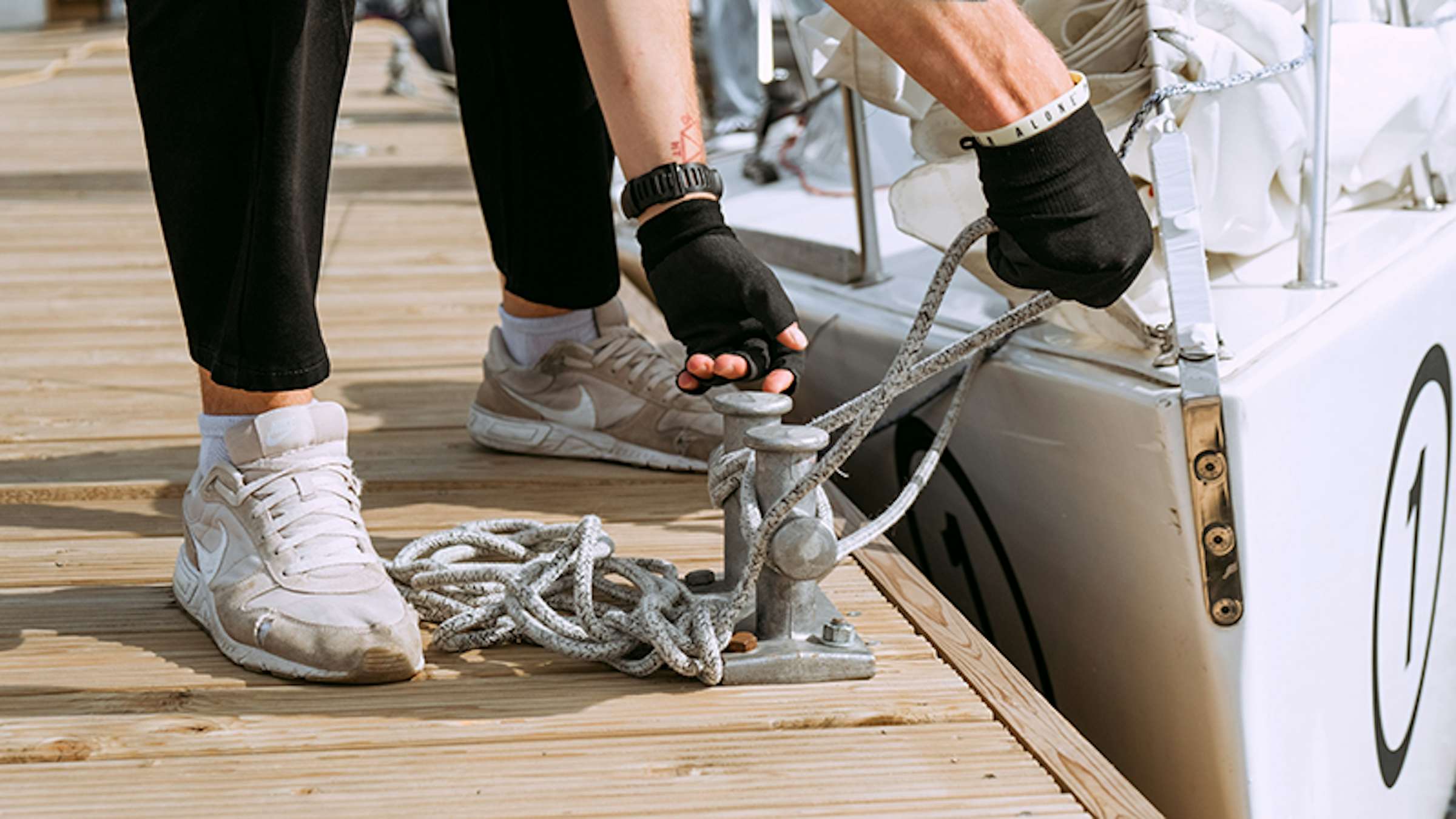
Taking the stress out of docking your boat
The process of docking a boat is recognised as being a stressful task for some. So much so that there's plenty of advice out there – tips, step-by-step guides and YouTube clips – on how to master the task. And in 2025, technology is stepping in to help, with AI-assisted docking systems making their way into the recreational boating market. But whether you're relying on traditional skills or cutting-edge tech, understanding the fundamentals remains essential.
The golden rules
First piece of boat docking advice…take it slow and don't be afraid to stop, pull back, and circle around to try again. Place your fenders ahead of time and have your docking lines ready to tie off as soon as you're close to the dock.
The highly regarded Discover Boating site includes a comprehensive guide that covers preparing dock lines on your bow and stern, attaching fenders, lining up your approach and surveying the docking area, judging current, wind and water conditions, and using intermittent acceleration when approaching the dock.
Essential expert tips
Safety always comes first. Be sure to look around before docking and make sure that no hands are between bulkheads, seawalls or pilings, and that mooring lines aren't wrapped around hands, legs or feet. Communicate to your crew how you intend to dock before you begin the approach. In heavy winds, reduce your windage, particularly in a small boat.
When docking a single-engine boat, turn the wheel before applying power, not during or after, and apply short bursts of power instead of steady throttle. Never approach the dock faster than you're willing to hit it – this remains one of the best pieces of boating advice ever given. Keep the engine on until all lines are secure so you can manoeuvre as necessary. Don't be afraid to stop and start over if the approach isn't working.
The 45-degree approach
Approach the dock at a 45-degree angle and switch between gears. This makes it easier to aim for a certain spot and bring the boat in close. When you're about 30 metres from the pier, turn the controls away from the dock, allowing your boat's back end to swing in toward the dock. Switch to neutral to use the boat's momentum, then turn the wheel toward the pier. Put the gear in reverse and give the engine a little throttle to push the back end to the pier.
Not sure whether to make your approach into the wind or current? Approach into whichever force is greater as this will help you maintain control. The team at Boating Magazine agree: "When docking in a tough spot, wind and current – coupled with knowledge of how they affect your boat – plus situational awareness can serve you better than an army of deck hands."
Understanding wind and momentum
The effects of wind when docking can't be understated. They can be subtle or significant, and there's no substitute for experience. A wind or current behind you can cause you to go over your mark. A wind or current against you can mean you need more momentum to finish docking. Make a habit of noting the direction and intensity of the wind, and observing its effects on your boat.
The first line to toss is the spring line, with the loop fed through the boat's cleat. Minimal throttle, simply idling in gear, is the best speed for virtually every docking situation. Remember that your boat can't just be tied tight – you have to allow for the rise and fall of the water.
The tech revolution: AI-assisted docking
While mastering traditional boat handling skills remains essential, 2024 and 2025 have seen significant advances in autonomous docking technology. Brunswick Corporation partnered with Apex.AI to develop autonomous docking capabilities, with the system set to reach the market in 2026. The technology uses sensors and AI to handle complex manoeuvres, accounting for wind and current automatically.
Volvo Penta expanded its Assisted Docking system in 2024, using sensors, GPS-based dynamic positioning, joysticks and advanced algorithms to help boaters dock with precision. Avikus unveiled its Neuboat Dock II system in early 2025, featuring 360-degree surround-view cameras, real-time distance measurement, and an interactive 3D interface that eliminates blind spots.
These systems still require human oversight – skippers need to know how to handle all manoeuvres themselves. The technology acts as an assistant rather than a replacement for proper seamanship. Initial pricing puts these systems out of reach for many recreational boaters, but costs typically decrease over time as systems become more widely adopted.
Communication is key
Whether you're using AI assistance or traditional methods, good communication remains crucial. Approach the dock with a plan, communicate it to those onboard, and clearly delegate tasks. Assign who will handle each line and the order in which you want them done well in advance. Ensure your crew can hear you from where you'll be giving commands.
Practice these fundamentals regularly, and remember that even with new technology available, understanding wind, current and momentum control will always serve you well. Whether docking manually or with AI assistance, patience and preparation remain your greatest assets on the water.