
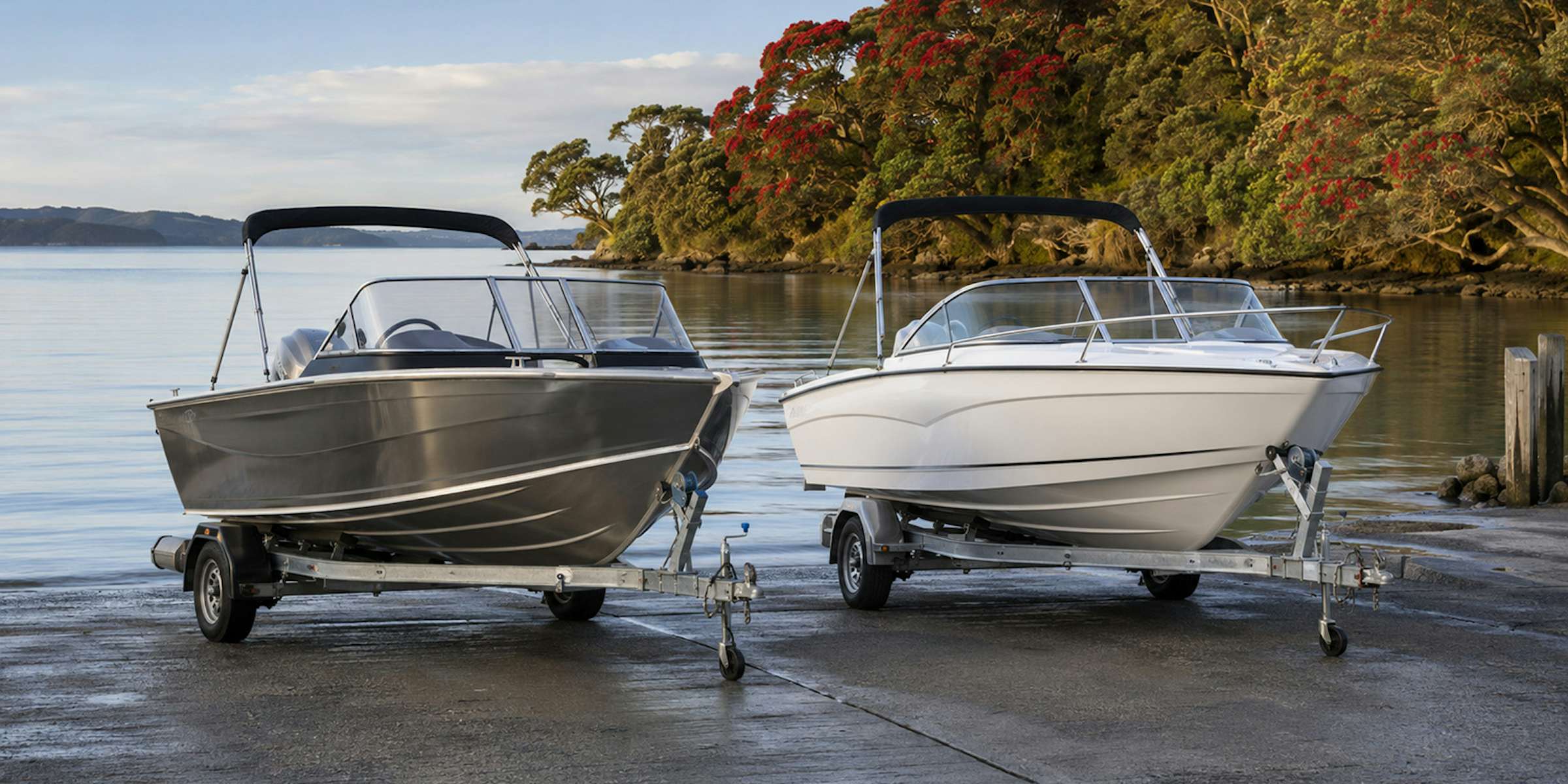
Aluminium vs fibreglass boats: what's right for New Zealand conditions?
Aluminium or fibreglass? It’s one of the first decisions any Kiwi boatie faces, and it shapes everything from your towing setup to your maintenance routine to how your boat handles the day you get caught out past the heads.
There’s no single right answer. The better question is which material suits your boating, your launching spots, and your budget, the same questions we cover in our guide to buying a boat in New Zealand. Here’s what actually matters for boating in New Zealand.
How each material handles our conditions
New Zealand’s coastline throws a lot at a boat. Exposed stretches like Cook Strait or the Hauraki Gulf on a southerly day call for a hull that handles chop without beating up everyone on board. Aluminium’s lighter weight means it can feel busier in a rough sea, getting pushed around more by wind and swell. Fibreglass’s extra weight tends to settle a boat down, giving a softer, more predictable ride when conditions turn.
That same weight difference flips the other way at the boat ramp or beach. Plenty of Kiwi launching spots are unforgiving, think rocky boulder banks, shallow sandbars, or a beach launch where you’re dragging the trailer over shells and stones. Aluminium shrugs off that kind of contact. A glancing knock dents the metal rather than cracking the hull, and minor dents are usually a quick, cheap fix. Fibreglass is more vulnerable here. A solid hit on a rock or wharf piling can crack or splinter the gel coat, and that kind of repair takes more time and skill to put right.
Towing matters too. A lighter aluminium hull generally needs less horsepower for the same performance, which can mean a smaller tow vehicle and lower running costs. If you’re launching solo at a tidal ramp or hauling your boat up the driveway by hand, that weight saving is felt every single trip.
The hybrid option: fibreglass deck, aluminium hull
It’s not always a straight either-or choice. A good number of New Zealand and Australian builders offer a third option: a plate aluminium hull paired with a fibreglass deck and cabin. The idea is to get the toughness and lighter towing weight of alloy below the waterline, with the smoother finish and easier-to-shape deck layout of fibreglass above it.
It’s worth knowing this exists if you’re boat shopping, since it doesn’t always come up in a straight aluminium versus fibreglass conversation but it’s a genuine option in the New Zealand market.
Maintenance and upkeep over the life of the boat
Fibreglass needs less day-to-day fussing in terms of structure. There’s no welding, no rivets, and no risk of electrolytic corrosion eating into the hull. The trade-off is the gel coat, which needs the odd polish and wax to keep its finish, and over many years can develop osmosis (small blisters caused by water getting into the laminate) if it isn’t looked after.
Aluminium is mechanically tougher but asks for a closer eye on corrosion, particularly where the hull meets fittings, fasteners, and your motor’s sacrificial anodes. If you’re swapping between hull types, take note that most antifouling paint contains copper, which shouldn’t go anywhere near an aluminium hull as it can accelerate corrosion.
Both materials reward a boat that’s looked after. Whichever you choose, a regular maintenance routine will save you money and headaches down the track.
What hull material means for insurance
Hull material is one of the details insurers ask about when you get a quote, alongside the boat’s age, how you use it, and where it’s kept. It feeds into how a claim is likely to play out if something goes wrong.
Generally speaking, aluminium repairs for minor damage (a dent from a ramp mishap, for example) tend to be quicker and cheaper to sort, while larger structural repairs, like a cracked weld, need a qualified boat builder and can take longer than people expect. Fibreglass repairs for small chips and cracks are usually straightforward, but bigger gel coat damage or anything affecting the laminate underneath can mean specialist labour and a longer wait, which adds to the cost of a claim.
If you’ve had any work done to your hull, whether that’s a repair, a repaint, or a more significant modification, it pays to let your insurer know. Our guide to marine surveys is a good place to start if you’re buying secondhand and want a clear picture of a hull’s condition before you commit.
Which is more common in New Zealand?
If you’re after numbers rather than opinions, aluminium dominates the New Zealand trailer boat market by volume, particularly in boats under six metres built for fishing. Fibreglass holds the lead in larger cruisers, launches, and yachts, where the smoother ride and roomier interior layouts matter more than towing weight.
Neither figure tells you what’s right for your own boating. Where you launch, how far offshore you go, and what you use the boat for will always count for more than what’s popular.
Whether you choose aluminium, fibreglass, or a hybrid of the two comes down to where you boat, how you launch, and what you can’t compromise on.
Sources: Powerboat Training NZ, Boats.co.nz, Power Boat Magazine