
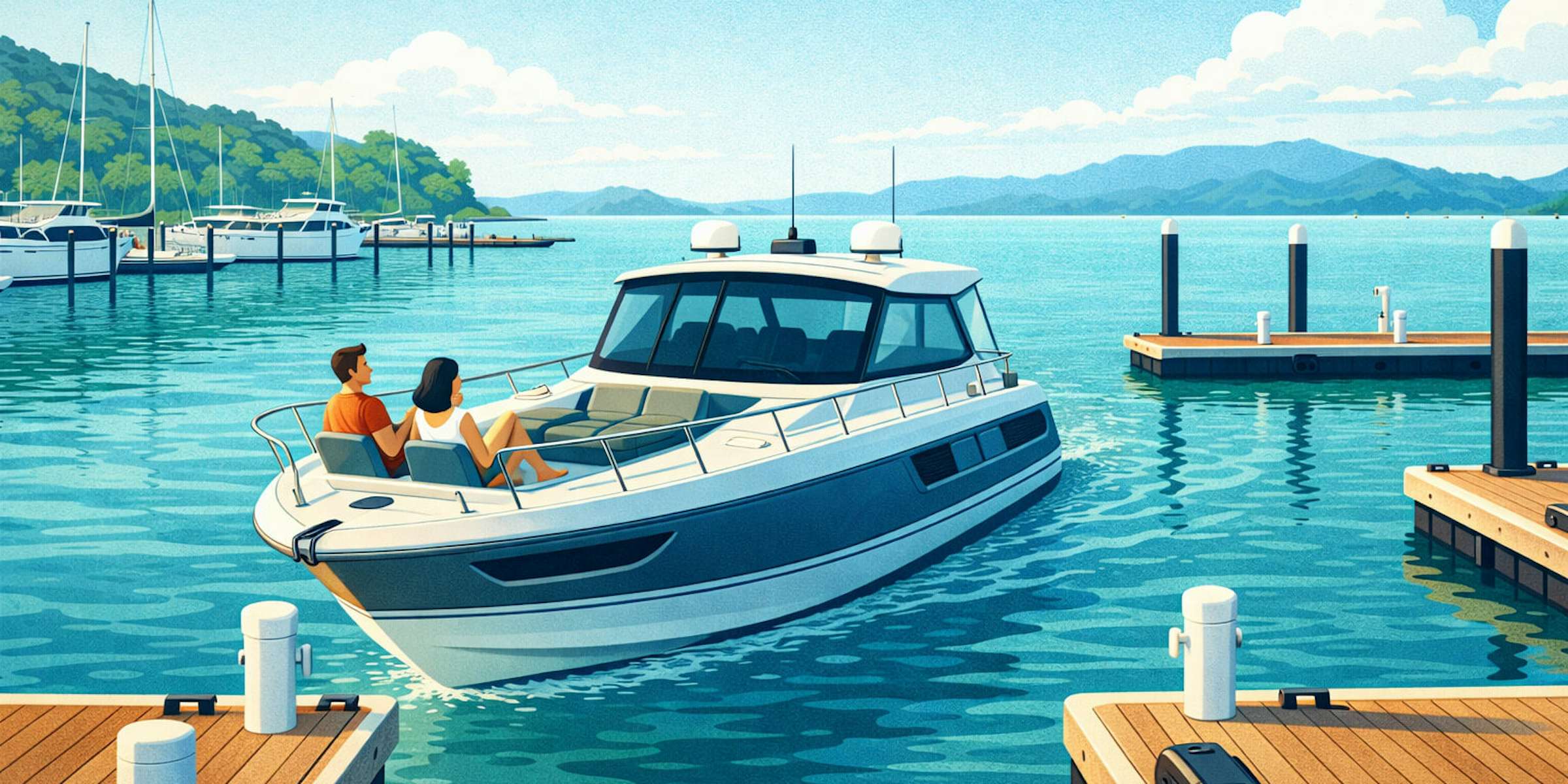
Are self-driving boats the future of recreational boating?
If you’ve spent any time watching the self-driving car industry, you might have wondered when the same technology would turn up on the water. The answer, it turns out, is now, or close enough to now that it’s worth paying attention.
Before you start worrying that someone is coming for your helm, the reality is a lot less dramatic than it sounds. We’re not talking about sitting back with a cold one while your boat navigates the Hauraki Gulf unaided. Autonomous boating technology, at least for now, is far more targeted than that.
What “self-driving” actually means on the water
Autonomous boat technology sits on a spectrum. At one end, you have familiar tools most boaties already use, like autopilot systems that hold a heading, or GPS chartplotters that track your route. At the other end is the full sci-fi version: a vessel that operates entirely without human input.
What’s arriving now sits somewhere in the middle, and the industry has a good phrase for it: situational autonomy. The idea is not to remove the enjoyment of actually driving your boat, but to take over in the situations most boaties find genuinely stressful, tight marinas, awkward docking angles, and wind pushing you sideways into someone else’s pride and joy.
The water also presents a much harder challenge than roads. There are no lane markings, no traffic lights, and conditions change constantly. Wind, current, waves and tidal flow all affect how a vessel behaves in real time, which is exactly why developing reliable autonomous systems for boats has taken longer than for cars.
What’s available globally right now
The most significant development to hit the market recently is Simrad’s AutoCaptain system, launched in late 2025. Developed alongside Mercury Marine and initially available on Boston Whaler models, it uses a network of six cameras for 360-degree situational awareness and handles docking, undocking, and short-distance manoeuvring autonomously via a touchscreen display. Critically, it works anywhere — not just marinas the system has previously mapped.
A second system worth watching is Avikus Neuboat Control, backed by HD Hyundai, which takes a similar approach using a wide array of integrated sensors to manage steering, throttle and collision avoidance. Both systems keep the skipper in the loop and in control at all times — think of it less like self-driving and more like assisted parking, but for your boat.
If you’re interested in how digital technology is already changing the boating experience, our guide to must-have boating apps for Kiwi boaties is a good place to start.
What’s happening in New Zealand
NZ isn’t waiting on the sidelines. Earth Sciences New Zealand (formerly NIWA) has already been running a six-metre autonomous trimaran in local waters, collecting fisheries acoustic data in collaboration with NZ drone company X-Craft Enterprises. It’s a research application rather than recreational, but it demonstrates the technology is being tested in real NZ sea conditions.
Closer to home for the average boatie, NZ company Tectrax has developed something genuinely clever: an autonomous, GPS-guided amphibious trailer called the Boat Launcher. Using onboard sensors and a remote control, the trailer can drive itself to and from the water and be operated from up to 500 metres away. It’s primarily aimed at older boaties and those with mobility challenges, but it’s a practical example of autonomous tech solving a real problem for Kiwi boat owners right now.
The regulatory picture
Maritime NZ and MFAT have published guidance for operators of small autonomous surface vessels in NZ waters, but the current framework is primarily focused on commercial and research vessels. Recreational autonomous boating regs are yet to catch up, which is fairly typical for emerging technology. As the systems move from niche to mainstream, expect the rules to follow.
The broader shift towards technology-assisted boating mirrors what we’ve already seen with electric boats - the technology moves faster than the rulebook, and boaties tend to be early adopters.
Worth watching, not worrying about
For most Kiwi boaties, self-driving boats aren’t something to act on today. The systems that exist are expensive, currently tied to specific overseas brands, and not yet widely available here. But the direction of travel is clear, and the pace of development in this space has been rapid.
What won’t change, regardless of how sophisticated the technology gets, is that the skipper remains responsible for the vessel and everyone on it. Maritime NZ is clear on that. So for now, you still need to know the rules, keep a proper lookout, and make good decisions on the water.
Until then, the skipper’s still responsible, which is probably reassuring to everyone except the piling. And as autonomous tech does eventually find its way onto Kiwi boats, it’s worth making sure your insurance cover reflects how your vessel is actually being used. Talk to the team at Mariner if you’re not sure.
Sources
Simrad AutoCaptain launch announcement, Simrad Yachting, October 2025, Self-Driving Boats Coming to Lakes Near You in 2026, Newsweek, January 2026, Autonomous vessels, Earth Sciences New Zealand (NIWA), Tectrax Boat Launcher, Boating New Zealand, August 2025, Guide to the use of Small Autonomous Surface Vessels in New Zealand’s Maritime Area, Maritime NZ / MFAT